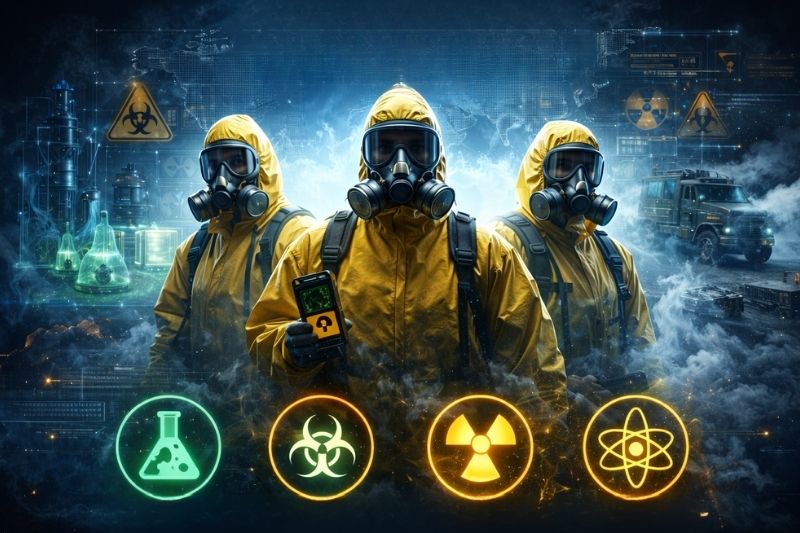
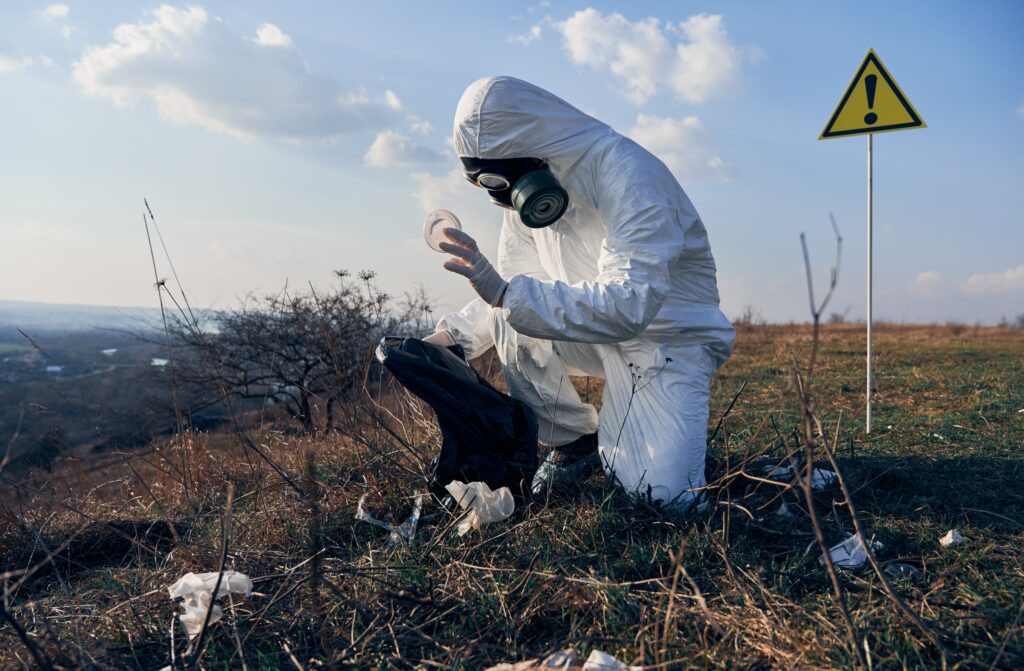
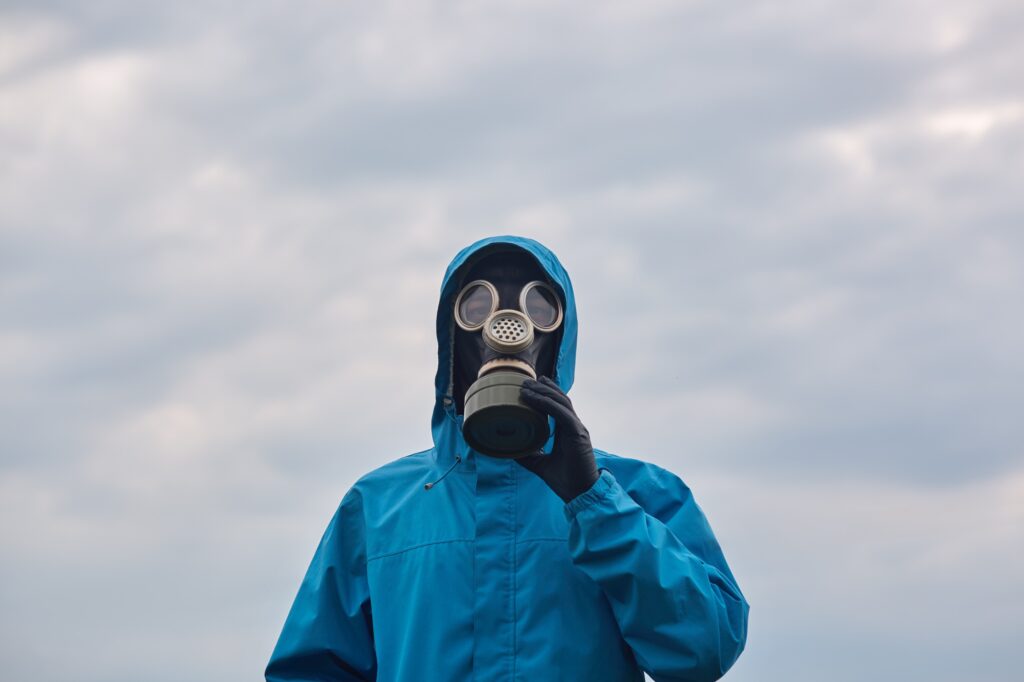
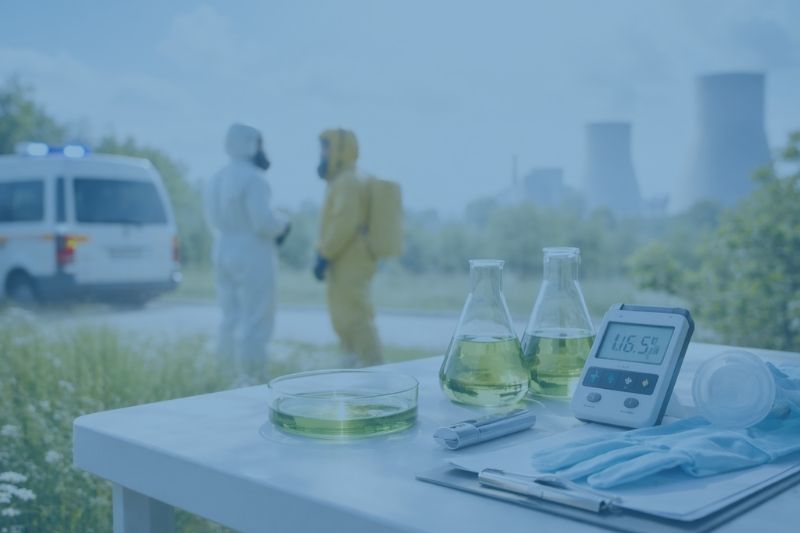
CBRN refers to a comprehensive risk awareness and management framework addressing threats arising from Chemical, Biological, Radiological, and Nuclear sources. It focuses on ensuring safe and effective responses to hazardous materials and situations that may be encountered in daily life, workplace environments, and institutional operations.
The concept of CBRN extends beyond extraordinary or emergency scenarios. It also encompasses potential risks that may arise during routine activities such as cleaning, maintenance, manufacturing, healthcare services, energy production, laboratory operations, and facility management.
Chemical risks refer to potential hazards arising from substances used in everyday life and professional environments, including cleaning products, industrial chemicals, pharmaceuticals, paints, solvents, and pesticides.
For example:
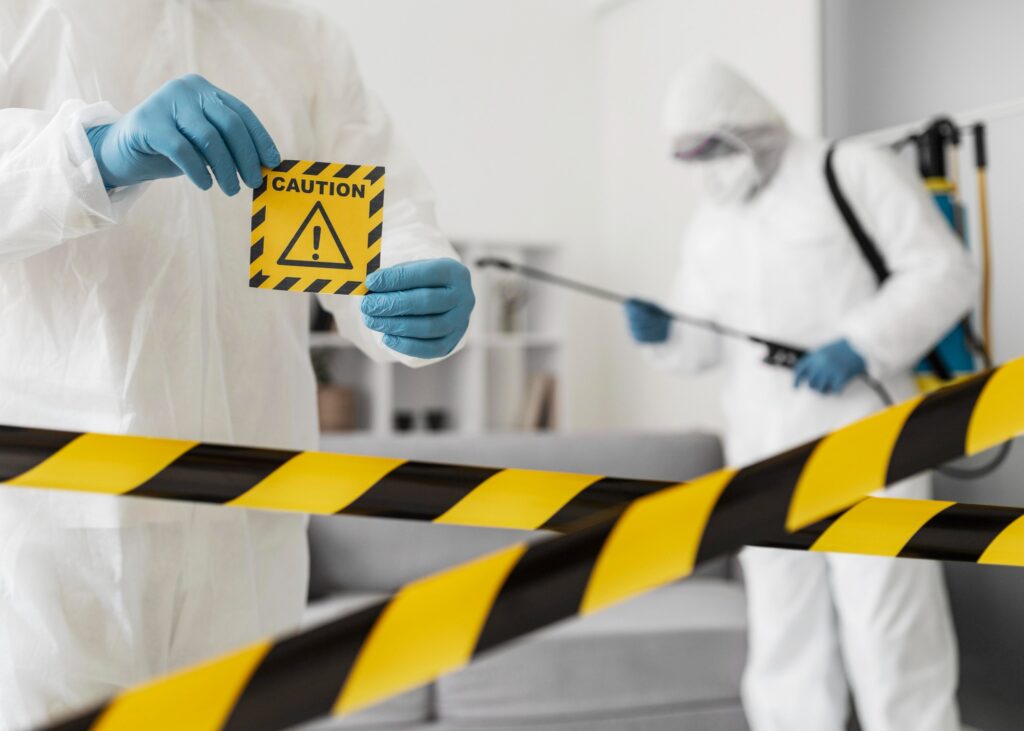
Disinfection and pest control procedures carried out in hotels and hospitals
Cleaning and maintenance chemicals used in industrial facilities
Chemical storage and handling processes in laboratories and technical areas
All fall within the scope of chemical risk. Improper use of such substances, inadequate ventilation, or unsuitable storage conditions may lead to serious health concerns and environmental hazards.
Biological risks encompass hazards arising from living organisms or biologically derived agents, such as bacteria, viruses, fungi, and biological toxins.
These risks may naturally occur in environments such as:
Hospitals and healthcare facilities
Food production and storage areas
Hotels, shared living spaces, and enclosed environments
Inadequate waste management, poor hygiene practices, or improper cleaning procedures can significantly increase the likelihood and impact of biological risks.
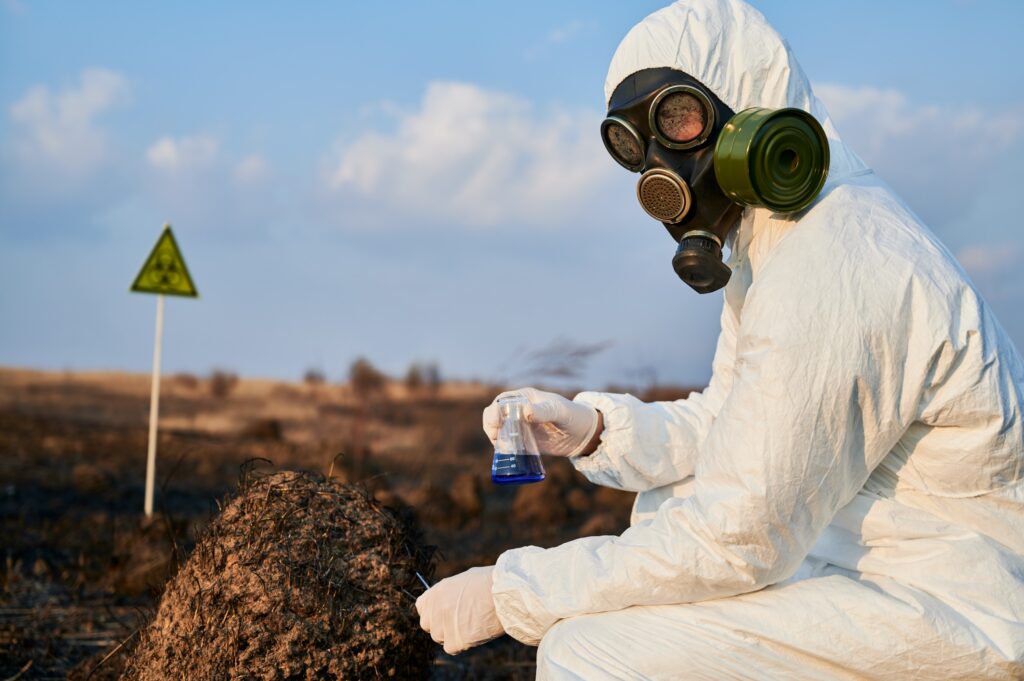
Radiological risks refer to hazards that arise from the uncontrolled or improper use of sources emitting ionizing radiation.
In daily and institutional settings, examples include:
X-ray and medical imaging devices used in hospitals
Measurement and control systems utilized in industrial applications
Radiation sources employed for research and educational purposes
When properly managed and operated in accordance with safety standards, these sources are safe. However, insufficient awareness, inadequate supervision, or lack of proper controls may lead to potential radiation exposure risks.
Nuclear risks encompass potential hazards associated with nuclear energy production, research activities, and related technologies.
These risks are generally evaluated within the context of:
Nuclear power plants
Research centers
Infrastructure connected to nuclear technologies
Effective nuclear risk management requires the highest level of safety standards, strict procedural controls, and continuous training. It represents one of the most discipline-intensive and highly regulated components of the CBRN framework.
Ensure the accurate identification of potential risks encountered in daily and institutional activities,
Equip employees with the appropriate behaviors and practices to protect themselves and their environment,
Prevent secondary risks arising from improper procedures or unsafe applications.
Beyond preparing participants for extraordinary scenarios, these training programs also foster a strong culture of safety within routine operational processes.
Level 1 is a foundational awareness program designed for personnel who are not directly responsible for intervention in CBRN incidents but may be the first to recognize a situation or may be indirectly exposed to risk. The objective at this stage is not technical response, but rather the ability to recognize CBRN threats, apply personal protective measures, and prevent secondary risks arising from incorrect actions.
The training covers the fundamental differences between CBRN categories, typical indicators, reporting chains, and the correct initial actions through tabletop scenario exercises.
Level 2 is an operational training program designed for personnel actively involved in field operations or critical tasks. At this stage, awareness alone is insufficient; proper use of Personal Protective Equipment (PPE), area management, and team coordination become central components.
The training incorporates realistic field scenarios and drills, aiming to ensure that personnel can respond to CBRN incidents in a controlled, coordinated, and safe manner.
Level 3 is an advanced field specialization program designed for personnel assigned to high-risk facilities or complex CBRN scenarios. At this level, basic awareness and standard PPE usage are no longer sufficient; advanced equipment, detection systems, and multi-team operational management are required.
The training includes advanced PPE application, detection and sampling procedures, and full-scale field exercises.
Level 4 represents the highest level of CBRN training and is designed for healthcare professionals and first receivers who are the initial point of contact during a CBRN incident. At this stage, the most critical factor is that the first point of contact carries the highest level of risk. An incorrect initial action may result in contamination spreading to healthcare facilities and the surrounding environment.
The training focuses on simultaneously managing clinical response and field safety.
Duration: 5 days (40 hours)
About Us
Foxlab & Robotics is a research and development company established in 2021 in Türkiye. The company operates within Teknopark Istanbul (Cube Incubation), where it conducts R&D and technology development activities.
Foxlab & Robotics specializes in advanced materials technologies, analytical laboratory solutions, and professional training and technical support services.
FoxLab provides laboratory- and field-based chemical analysis services aimed at the identification, classification, and risk-based evaluation of chemical substances used in industrial and commercial facilities.
For detailed information about our projects or potential collaborations, to submit your requests, or to explore partnership opportunities, please complete our contact form and get in touch with us.